
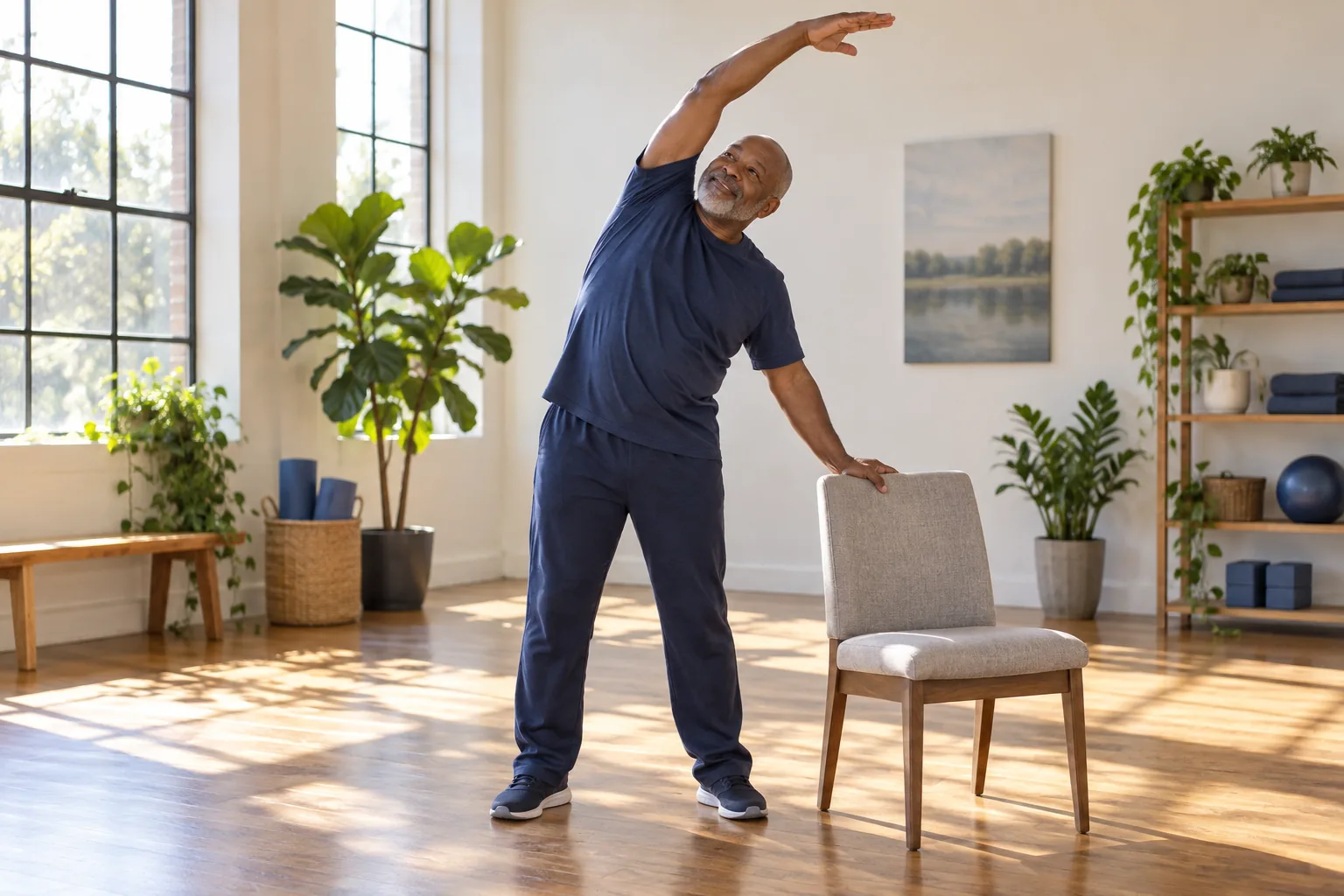
Mobility is the ability to move a joint through a useful range while maintaining control. It influences ordinary tasks such as reaching a shelf, turning to look behind you, getting up from a chair and walking comfortably. Paying attention to mobility can be especially valuable after 40, but the goal is not to promote fear about aging. It is to keep practicing movements that matter to your daily life.
Mobility work can be simple and adaptable. It should match your current ability and can be combined with strength and balance practice. Progress comes from steady, comfortable exposure rather than forcing a dramatic range of motion.
Mobility is not the same as flexibility
Flexibility generally describes how far a muscle or group of tissues can lengthen. Mobility includes range of motion, strength, coordination and control around a joint. You may be able to stretch into a position but still find it difficult to move in and out of that position during an everyday task.
This distinction helps explain why passive stretching is only one possible tool. A complete approach may include gentle joint movement, controlled repetitions and strength exercises performed through a comfortable range. The aim is not to achieve an impressive pose. It is to improve confidence and control in movements you actually use.
Connect practice to everyday movement
Choose movements based on the activities you want to maintain or make easier. Ankle and hip mobility can support walking and stair use. Shoulder and upper-back movement can help with reaching and dressing. Controlled rotation may be useful when turning during household or recreational activities.
Notice where a task feels limited, but avoid diagnosing the reason on your own. Start with a comfortable version and pay attention to how you respond. A chair, wall or countertop can provide support. Small improvements in control and ease may be more relevant than pursuing the largest possible range.
- Practice getting up from a stable chair with control.
- Use supported ankle movement before a walk.
- Add gentle shoulder and upper-back motion during work breaks.
Work within a safe, comfortable range
A mobility exercise should not require you to push through sharp pain, dizziness, numbness or a sense that a joint is unstable. Move slowly enough to notice what you feel. Mild effort or a gentle stretching sensation may be expected, but forcing a position can make it harder to control.
Your comfortable range may vary from day to day. Sleep, previous activity, stress and time spent sitting can influence how movement feels. Use that information to adjust the session. Reducing the range, slowing the pace or using support is a practical modification, not a failure.
Combine mobility with balance and strength
Mobility becomes more useful when you can control the range you have. Strength practice can help you enter, hold and leave positions with greater confidence. Balance exercises can help you manage changes in direction and uneven surfaces. These qualities overlap during nearly every daily movement.
A session might pair a controlled hip movement with a sit-to-stand exercise, or ankle mobility with supported calf raises. Begin with stable positions and progress only when the current version feels controlled. Keep a sturdy support nearby during balance work and choose an environment free of trip hazards.
Start gradually and repeat often
Long, intense mobility sessions are not required. A few controlled repetitions performed several times during the week can create a sustainable starting point. Attach the practice to an existing routine, such as after a walk, before strength training or during a break from sitting.
Progress one variable at a time. You might add a repetition, slightly increase the comfortable range or reduce the amount of support. Changing several variables at once makes it difficult to understand how your body responded. Consistent, gradual practice also makes it easier to distinguish normal effort from a signal to pause.
- Begin with slow, supported movements.
- Breathe normally rather than holding your breath.
- Stop before fatigue causes your form to change.
- Record which movements feel easier over time.
Build a short mobility routine
Select three to five areas connected to your needs. A brief routine might include ankle rocks, a supported hip movement, gentle upper-back rotation and shoulder circles. Use a range that allows steady breathing and control. You do not need to include every joint in every session.
Reassess the routine after several weeks. If an exercise feels easy and useful, progress it gradually. If it repeatedly causes discomfort or does not match your goals, replace it. Personalized coaching can help you organize mobility exercises for adults over 40 alongside strength work and ordinary weekly activity.
When to consult a healthcare professional
Talk with a qualified healthcare professional before beginning or changing exercise if you have a recent injury, unexplained pain, significant balance concerns, new neurological symptoms or a condition that may affect movement. Seek prompt care for severe or sudden symptoms rather than attempting to address them with mobility exercises.
A fitness coach can observe exercise technique, offer general modifications and help build a gradual routine. Fitness services do not diagnose injuries or medical conditions. Clear communication between you, your healthcare professional and your coach can help define appropriate boundaries for activity.
Common questions
How often should adults over 40 practice mobility?
Frequency depends on the person and the activity. Brief, comfortable practice several times a week can be a manageable starting point, especially when linked to walking or strength sessions.
Should mobility exercises hurt?
Do not push through sharp pain, numbness, dizziness or instability. Reduce the range or stop, and seek professional guidance when symptoms are new, persistent or concerning.
Is stretching enough for mobility?
Stretching can be one part of a routine, but mobility also involves strength and control through a useful range of motion.